

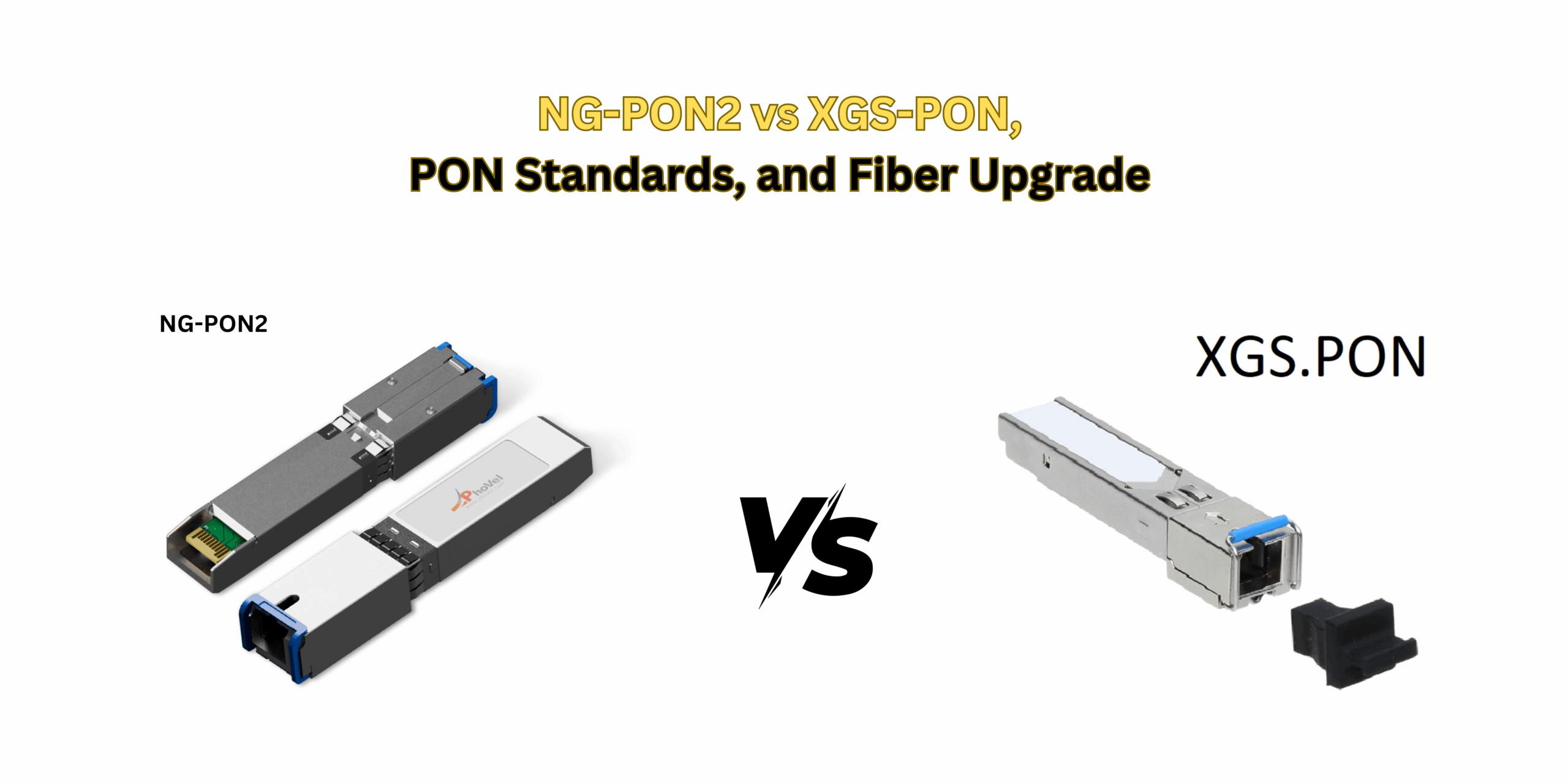
The debate around NG-PON2 vs XGS-PON is intensifying as Internet Service Providers (ISPs) face the challenge of delivering higher speeds, lower latency, and more reliable connectivity. Both technologies represent the cutting edge of PON standards, but the real question is: which will power the next big fiber upgrade wave by 2026?
XGS-PON has seen widespread adoption due to its balance of performance and cost-efficiency, while NG-PON2 offers advanced wavelength division multiplexing (WDM) capabilities that promise unmatched scalability. As we approach 2026, ISPs worldwide are weighing their options carefully.
Understanding the Basics of PON Standards
What is XGS-PON?
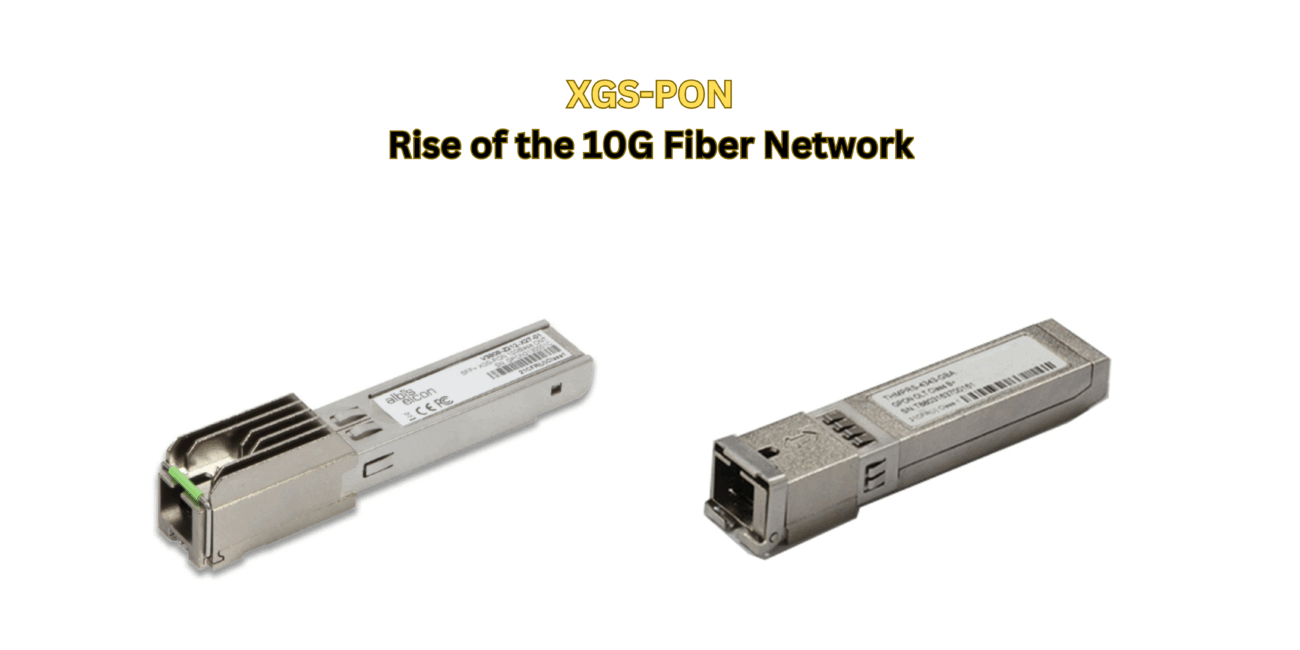
XGS-PON, short for 10-Gigabit-capable Symmetrical Passive Optical Network, provides 10 Gbps symmetrical speeds. It is considered the logical successor to GPON, offering higher bandwidth at a reasonable cost, making it ideal for residential FTTH and small-to-medium enterprises.
What is NG-PON2?
NG-PON2, or Next-Generation Passive Optical Network 2, expands capacity using WDM (multiple wavelengths). It delivers up to 40 Gbps downstream and 10 Gbps upstream per wavelength, with the ability to stack multiple channels. This makes it attractive for enterprise applications and regions planning long-term fiber upgrades.
Why PON Standards Matter for ISPs
The choice between NG-PON2 vs XGS-PON is critical because it affects investment costs, service offerings, and competitive positioning. PON standards are the backbone of FTTH networks, and their evolution will dictate global connectivity.
NG-PON2 vs XGS-PON: A Technical Comparison
Bandwidth and Speed
- XGS-PON: Delivers 10G symmetrical speeds.
- NG-PON2: Provides up to 40G downstream with wavelength stacking, enabling higher throughput.
Symmetry and Latency
Both support low-latency services, but XGS-PON offers a more cost-efficient balance for symmetrical speeds, whereas NG-PON2 excels in handling enterprise workloads.
Wavelength Utilization
- XGS-PON: Uses a single wavelength pair.
- NG-PON2: Uses multiple wavelengths, supporting dynamic load balancing and redundancy.
Cost and Complexity
- XGS-PON: Lower cost, easier deployment, and better vendor support.
- NG-PON2: Higher equipment costs, more complex deployment, but greater scalability.
Market Trends Driving Fiber Upgrade Decisions: NG-PON2 vs XGS-PON
ISP Investments in XGS-PON
XGS-PON has already become the mainstream choice for ISPs across Europe, North America, and Asia. Its simplicity and affordability make it the most attractive option for mass FTTH rollouts in 2026.
The Case for NG-PON2 Adoption
While adoption is slower, NG-PON2 is appealing for enterprises, data centers, and niche high-density urban markets. The WDM-based flexibility ensures a longer runway for future fiber upgrades.
Regional Deployment Patterns
- North America & Europe: Strong tilt toward XGS-PON due to cost considerations.
- Asia-Pacific: Mixed approach, with some operators testing NG-PON2 for enterprise backhaul.
Benefits of XGS-PON for ISPs
Simplicity and Cost-Effectiveness
The primary reason XGS-PON dominates is its cost efficiency. Equipment and operational expenses are significantly lower compared to NG-PON2.
Scalable Fiber Upgrade Path
ISPs can gradually transition from GPON to XGS-PON without overhauling their entire infrastructure, making upgrades smoother.
Support for Mass Market FTTH
For residential users demanding streaming, gaming, and remote work, XGS-PON provides sufficient capacity to meet 2026 demands.
Benefits of NG-PON2 for ISPs
Advanced WDM Capabilities
NG-PON2’s ability to operate multiple wavelengths on a single fiber increases capacity dramatically.
High Capacity for Enterprise Services
It’s ideal for enterprises requiring dedicated high-capacity channels, such as banks, hospitals, and government agencies.
Long-Term Future-Proofing: NG-PON2 vs XGS-PON
Although expensive, NG-PON2 offers the longest life cycle among PON standards, reducing the frequency of disruptive upgrades.
Challenges in Choosing Between PON Standards
CAPEX and ROI Concerns
- XGS-PON: Lower capital expenditure, quicker ROI.
- NG-PON2: High initial investment, long-term payoff.
Vendor Ecosystem and Equipment Availability
XGS-PON has a mature ecosystem with wide vendor support, while NG-PON2 still faces limited availability and higher costs.
Compatibility with Existing GPON Networks
Both technologies are backward-compatible, but ISPs often prefer XGS-PON for smoother GPON coexistence.
Fiber Upgrade Strategies for 2026
Hybrid Deployments
Many ISPs are adopting hybrid approaches, using XGS-PON for mass FTTH and NG-PON2 for enterprises and niche markets.
Cloud-Native PON Management
Operators are increasingly using cloud-native platforms for OLT and ONU management, improving scalability and lowering costs.
Preparing for 25G-PON and Beyond
ISPs view both XGS-PON and NG-PON2 as stepping stones to 25G-PON and 50G-PON, which will dominate after 2030.
Industry Predictions: NG-PON2 vs XGS-PON in 2026
Which Standard is Winning Today
As of 2026, XGS-PON is the clear leader in mass deployments. It strikes the right balance between affordability and performance.
What Experts Expect by 2030
Analysts predict XGS-PON will dominate FTTH, while NG-PON2 will remain relevant in specialized markets such as enterprise backhaul and smart city backbones.
FAQs About NG-PON2 vs XGS-PON
Q1: Which is cheaper to deploy: NG-PON2 or XGS-PON?
A1: XGS-PON is significantly cheaper and more widely supported by vendors.
Q2: Does NG-PON2 support higher speeds?
A2: Yes, NG-PON2 supports up to 40G using multiple wavelengths, but at a higher cost.
Q3: Are both standards compatible with GPON?
A3: Yes, both coexist with GPON networks, though XGS-PON integration is simpler.
Q4: Which is better for enterprises?
A4: NG-PON2 is better for enterprises that need dedicated, high-capacity bandwidth.
Q5: Will ISPs skip directly to 25G-PON?
A5: Some may, but most ISPs are adopting XGS-PON first due to cost efficiency.
Q6: Which PON standard will dominate by 2026?
A6: XGS-PON is expected to dominate, while NG-PON2 will serve niche high-performance markets.
Conclusion: Choosing the Right PON Standard for the Fiber Upgrade Journey
The battle of NG-PON2 vs XGS-PON is shaping the future of global PON standards. While NG-PON2 offers advanced wavelength flexibility and higher capacity, its high costs and complexity make it less attractive for mass deployments. On the other hand, XGS-PON strikes the right balance of affordability, scalability, and performance, making it the dominant choice for FTTH networks by 2026.
For ISPs, the right fiber upgrade strategy may involve hybrid deployments, leveraging XGS-PON for broad residential coverage while reserving NG-PON2 for high-value enterprise and backbone services.
The bottom line? By 2026, XGS-PON will dominate the mainstream market, while NG-PON2 will remain a powerful but specialized player.