

Introduction: multi-PON OLT, hybrid fiber networks, and ISP deployment
As fiber networks evolve in 2026, OLTs operators are rethinking how to deliver faster, more scalable, and more cost-effective services. The rise of the multi-PON OLT has become a cornerstone in enabling hybrid fiber networks, offering ISPs the flexibility to support multiple generations of PON technologies on a single platform. This transformation is redefining ISP deployment models, allowing providers to extend gigabit and even 10G services without overhauling their entire infrastructure.
For wholesale and retail ISPs alike, the ability to deploy future-proof OLTs that support GPON, XGS-PON, and NG-PON2 simultaneously has become a competitive necessity. Let’s explore how OLTs are evolving, what this means for network design, and why 2026 marks a turning point for multi-PON strategies.
The Evolution of OLTs in the FTTH Market
- Traditional OLTs – Initially designed for GPON, delivering up to 2.5 Gbps downstream.
- Single-PON Upgrades – ISPs began upgrading to XGS-PON for symmetric 10G speeds.
- The Shift to Multi-PON OLTs – Supporting multiple PON standards on the same chassis or line card, reducing costs and deployment complexity.
This evolution reflects the need for ISPs to serve diverse customer demands—residential, business, and enterprise—without investing in separate hardware platforms.
What is a Multi-PON OLT?
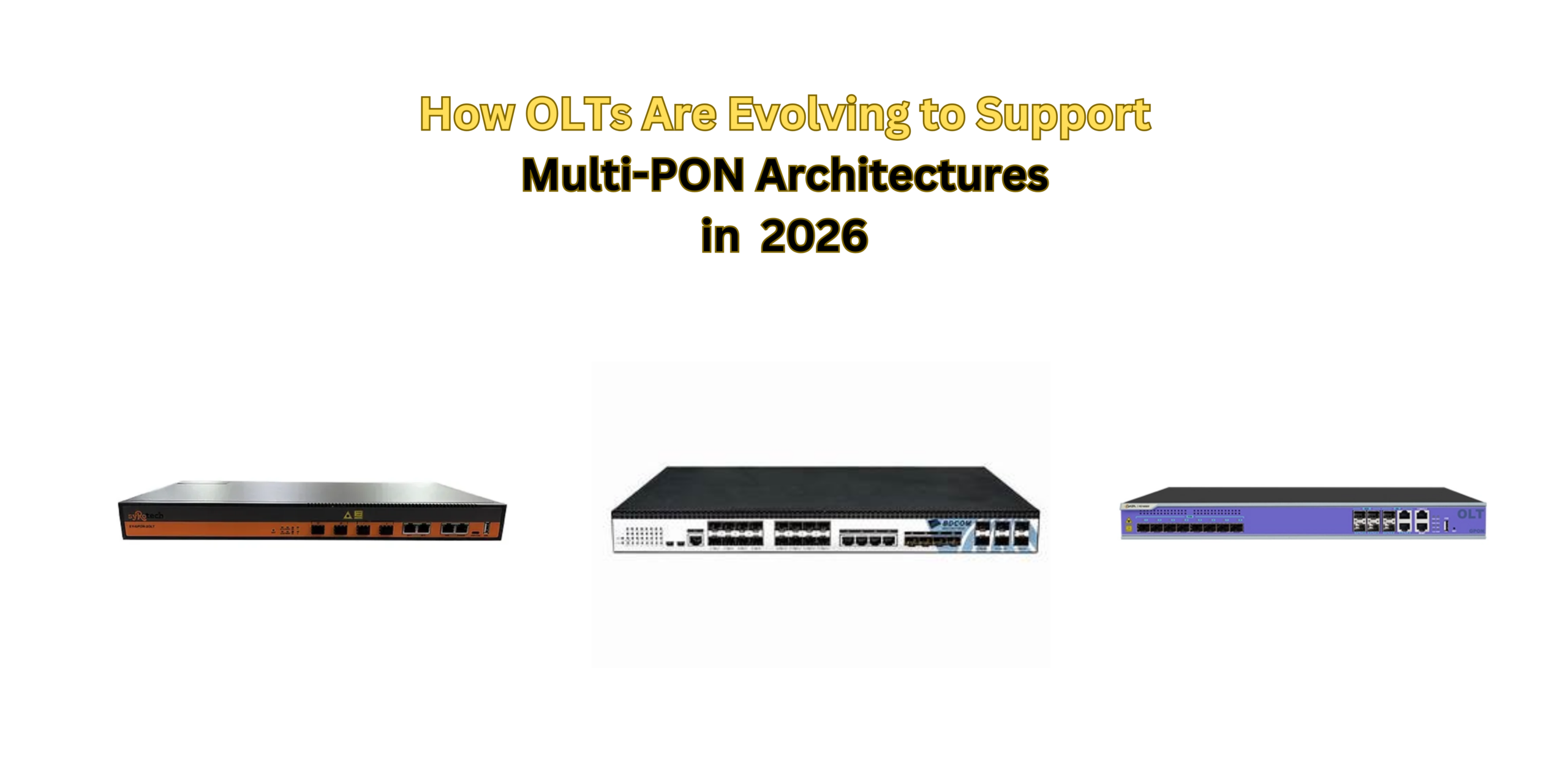
A multi-PON OLT is an Optical Line Terminal that supports more than one Passive Optical Network (PON) standard. It can simultaneously manage:
- GPON (2.5G/1.25G)
- XGS-PON (10G/10G)
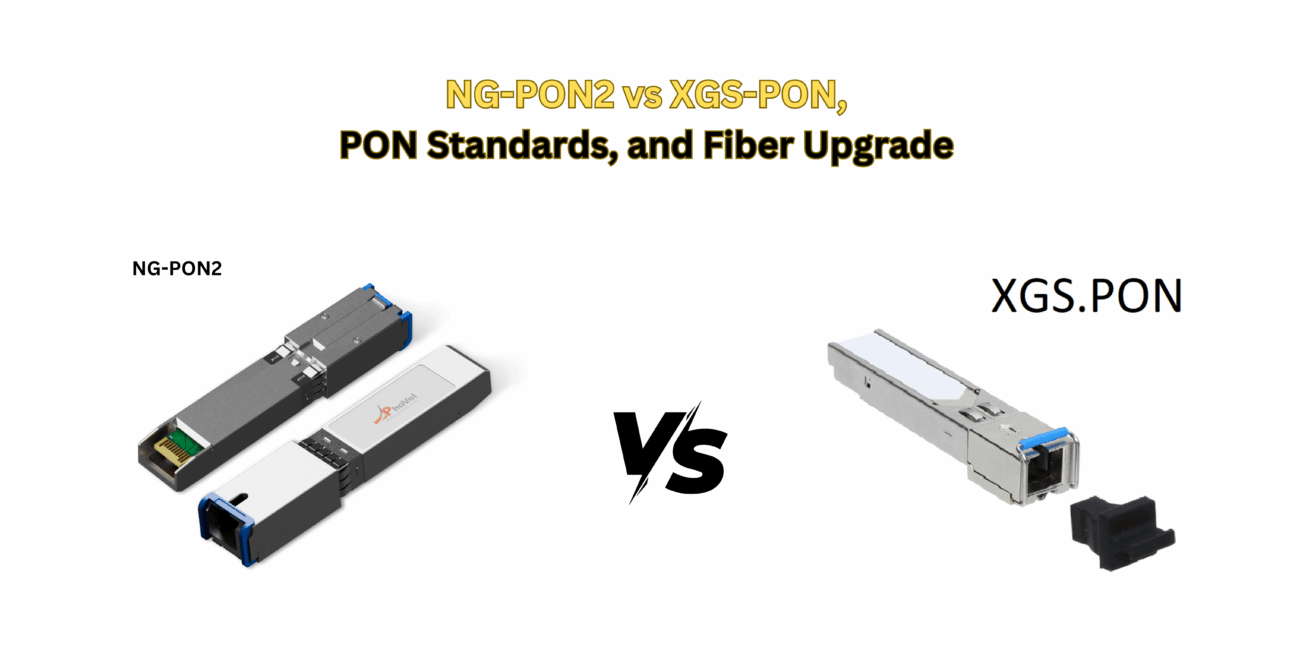
- NG-PON2 (40G capacity through multiple wavelengths)
This versatility is what makes multi-PON architectures so attractive to ISPs. Instead of migrating customers all at once, operators can phase upgrades, serving different user needs on the same platform.
Why Hybrid Fiber Networks Matter in 2026
Hybrid fiber networks blend multiple access technologies—such as GPON, XGS-PON, and wireless offload—within the same infrastructure. They allow ISPs to:
- Optimize costs by reusing existing GPON deployments.
- Introduce 10G services selectively where demand is highest.
- Support business-grade and residential customers on different PONs without extra OLT racks.
- Future-proof networks for higher bandwidth services.
In short, hybrid networks balance flexibility, scalability, and cost efficiency—key drivers in ISP strategies today.
Key Benefits of Multi-PON OLT for ISP Deployment
1. Cost Savings
ISPs avoid rip-and-replace upgrades by running GPON and XGS-PON side by side.
2. Simplified ISP Deployment
A single OLT can support varied customers—from 100 Mbps home users to 10G enterprises—on the same system.
3. Faster Time-to-Market
ISPs can launch new services quickly by activating different PON ports as needed.
4. Investment Protection
By using a multi-PON OLT, operators extend the lifecycle of their infrastructure.
Use Cases of Multi-PON OLT in Hybrid Fiber Networks
- Residential Broadband – Legacy GPON users continue service while new customers adopt XGS-PON.
- Enterprise Services – ISPs can deploy 10G or higher capacity without deploying separate OLTs.
- Rural Broadband Expansion – Hybrid networks allow selective high-speed upgrades in underserved areas.
- Wholesale ISPs – Provide flexible bandwidth tiers to retail partners on the same infrastructure.
Technical Innovations in Multi-PON OLT 2026
- Software-defined PON (SD-PON) – Centralized control of different PONs with automation.
- Plug-and-Play Line Cards – Modular upgrades supporting GPON, XGS-PON, and NG-PON2.
- AI-driven ISP Deployment – Predictive analytics optimize network performance.
- Cloud OLT Management – Remote orchestration of hybrid fiber networks at scale.
Challenges in Deploying Multi-PON OLTs
Despite the advantages, ISPs must address:
- Capital Costs – Initial investment in multi-PON platforms.
- Skill Gaps – Network teams require training for hybrid deployments.
- Interoperability – Ensuring ONUs from different vendors work seamlessly.
- Energy Efficiency – Higher-capacity OLTs consume more power if not optimized.
How Multi-PON OLTs Improve Customer Experience
- Seamless Upgrades – No service disruption when migrating to higher PON tiers.
- Customized Packages – ISPs can create diverse bundles tailored to user needs.
- Improved Reliability – Redundancy across hybrid fiber networks ensures uptime.
- Enhanced Performance – From gigabit streaming to 10G enterprise VPNs, all users benefit.
Comparing Multi-PON OLT with Traditional OLTs
| Feature | Traditional OLT | Multi-PON OLT |
| Supported Standards | Single (e.g., GPON) | Multiple (GPON, XGS-PON, NG-PON2) |
| Cost Efficiency | Lower upfront, high upgrade costs | Higher upfront, long-term savings |
| ISP Deployment Speed | Slower upgrades | Faster phased rollouts |
| Scalability | Limited | High |
| Customer Flexibility | Low | High |
ISP Deployment Trends in 2026
- Hybrid Fiber Networks Dominate – Combining GPON and XGS-PON in single deployments.
- Cloud-Managed OLTs – ISPs reduce OpEx through centralized management.
- Green Deployments – Energy-efficient multi-PON OLTs reduce power costs.
- Wholesale ISPs Expand – Multi-PON architectures make it easier to lease services to multiple providers.
The Future: Beyond Multi-PON OLTs
- 25G-PON and 50G-PON Readiness – Already being tested by leading ISPs.
- WiFi 7 Integration – Seamless fiber-to-wireless experience in ISP offerings.
- Edge Computing + Fiber – OLTs may integrate edge capabilities for low-latency apps.
FAQs About Multi-PON OLT and ISP Deployment
Q1: What makes a multi-PON OLT different from a standard OLT?
A1: A multi-PON OLT supports multiple PON technologies simultaneously, unlike traditional single-standard OLTs.
Q2: How do hybrid fiber networks help ISPs?
A2: They allow ISPs to balance GPON and XGS-PON deployments for cost-effective scalability.
Q3: Is multi-PON OLT deployment more expensive?
A3: While upfront costs are higher, long-term savings from phased upgrades outweigh the investment.
Q4: Can ISPs deploy multi-PON OLTs in rural areas?
A4: Yes, hybrid fiber networks enable selective high-speed upgrades in underserved regions.
Q5: Do multi-PON OLTs support NG-PON2?
A5: Many platforms in 2026 support GPON, XGS-PON, and NG-PON2 simultaneously.
Q6: How do multi-PON OLTs improve customer experience?
A6: They ensure smooth upgrades, reliable performance, and tailored service bundles.
Conclusion: Multi-PON OLTs are the Backbone of Hybrid Fiber Networks in 2026
The multi-PON OLT has become essential for ISPs aiming to balance cost efficiency with future scalability. By enabling hybrid fiber networks, these platforms allow seamless service delivery across GPON, XGS-PON, and NG-PON2. For ISPs, smarter ISP deployment means phased rollouts, better ROI, and happier customers.
As demand for bandwidth grows, multi-PON architectures will dominate the FTTH landscape, giving ISPs the flexibility they need to compete in 2026 and beyond.