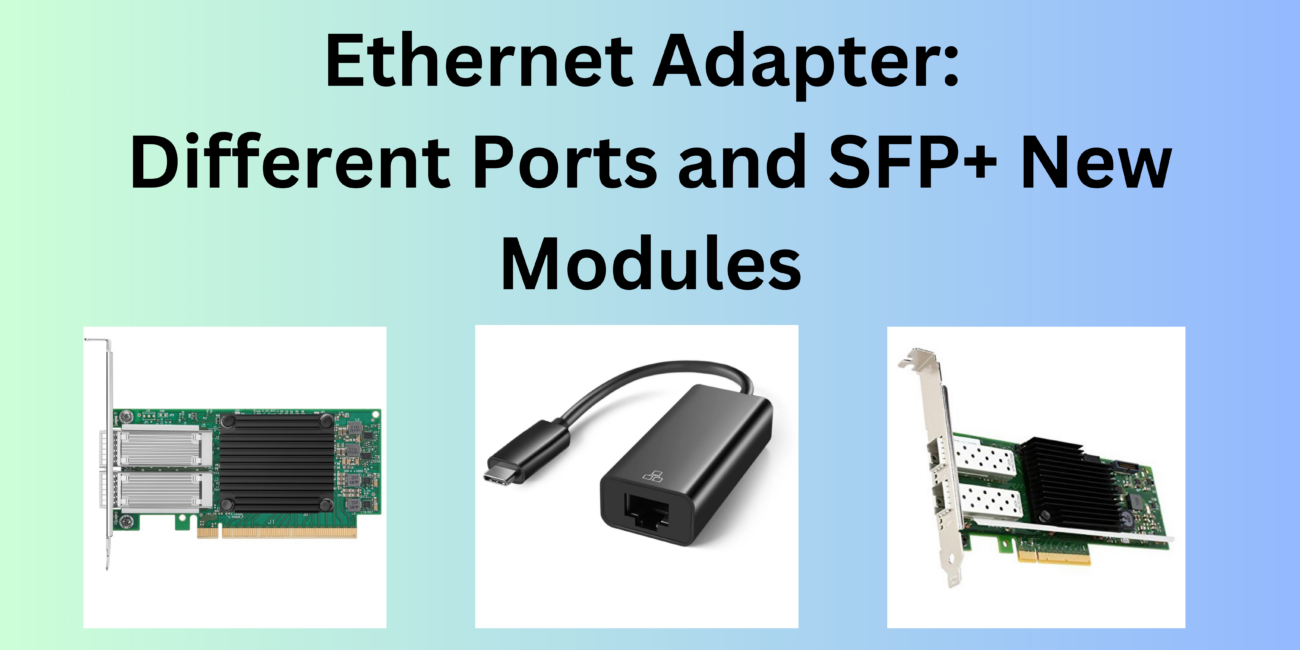


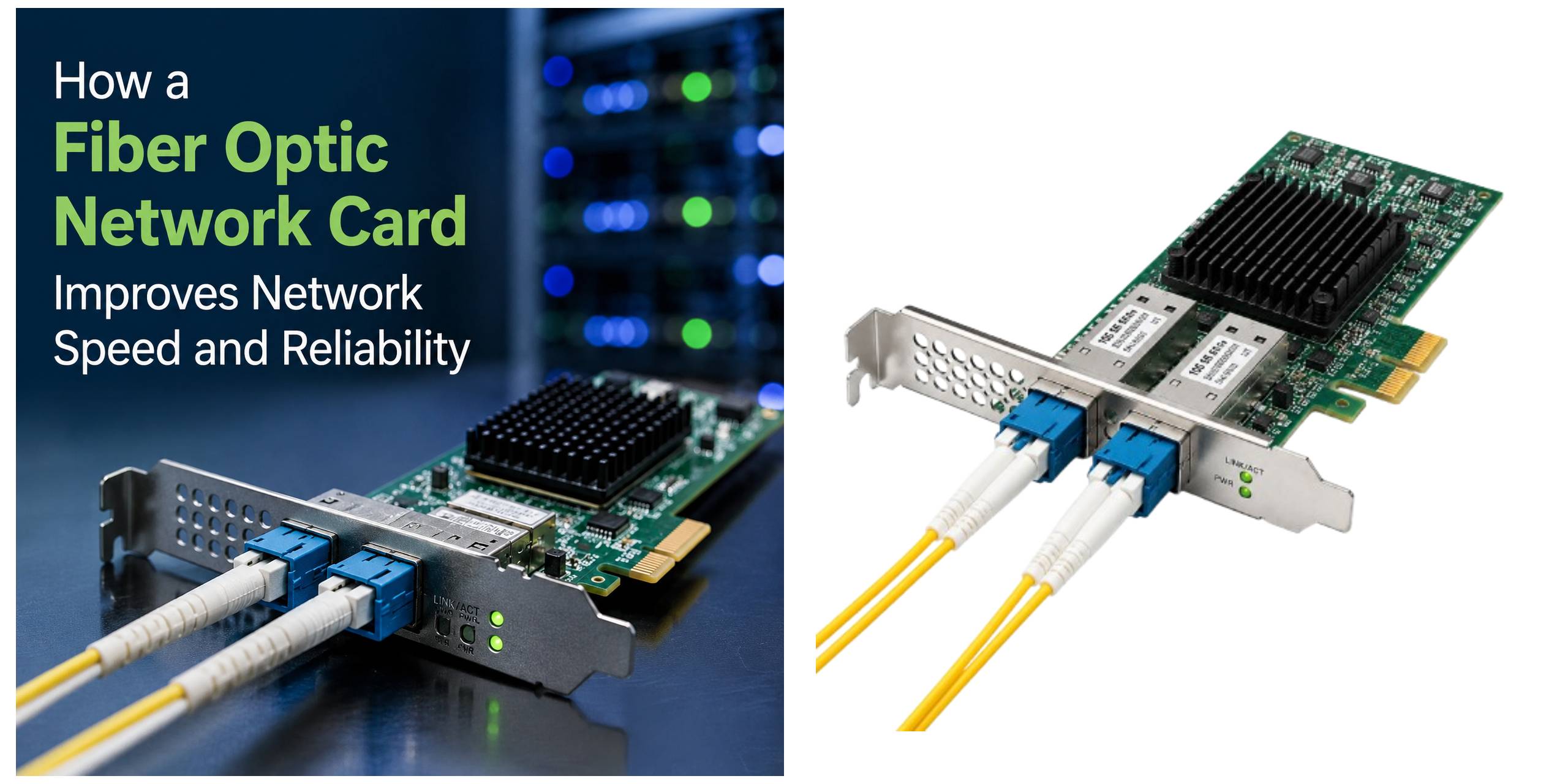
The foundation of modern digital infrastructure rests entirely on the ability to move massive datasets at unparalleled speeds, a capability fundamentally unlocked by the fiber optic network card. This critical hardware component translates digital electrical signals into optimized light pulses, allowing data to traverse vast distances across glass fibers without the degradation inherent in traditional copper mediums. As global enterprises transition toward cloud-centric and AI-driven operations, the physical limitations of legacy networking hardware have become glaringly apparent. Upgrading to advanced optical interfaces is no longer a theoretical future state but an immediate operational necessity for maintaining competitive performance standards.
The driving force behind this rapid technological adoption is the exponential growth in global data consumption, heavily accelerated by the commercialization of generative artificial intelligence and ultra-high-definition streaming. Legacy network architectures simply lack the bandwidth capacity and symmetrical throughput required to sustain these modern, resource-intensive applications without introducing crippling latency. Network architects are consequently compelled to abandon outdated electrical interfaces in favor of pure optical transmission technologies. This structural pivot represents one of the most significant overhauls in enterprise networking hardware in the past two decades.
The direct impact on enterprise buyers and telecommunications providers is an urgent need to re-evaluate their physical layer investments to ensure compatibility with multi-gigabit service requirements. Procurement teams face the complex challenge of identifying hardware that not only resolves current throughput bottlenecks but also seamlessly integrates into their existing rack architectures and power budgets. Selecting inadequate equipment inevitably results in premature hardware obsolescence, forcing disruptive and expensive retrofitting projects. Consequently, hardware selection has evolved into a high-stakes strategic decision requiring deep technical foresight.
Businesses respond to these escalating demands by completely abandoning fragmented retail purchases in favor of strategic, wholesale-driven customization partnerships with original design manufacturers. By procuring a fiber optic network card built to precise operational specifications, organizations secure a definitive advantage in network longevity and throughput efficiency. This collaborative approach allows buyers to dictate exact port configurations, laser diagnostics, and thermal profiles that generic retail products simply cannot provide. Ultimately, a dedicated wholesale customization strategy ensures that the network infrastructure scales flawlessly alongside expanding enterprise demands.
1. How a Fiber Optic Network Card Drives Modern Network
The fundamental architecture of modern data transmission relies heavily on the capabilities of a fiber optic network card, which translates digital signals into light pulses for rapid transit across glass fibers. This piece of hardware acts as the critical bridge between high-capacity fiber backbones and local processing units, ensuring that data moves at the speed of light with minimal signal degradation. By eliminating the electrical resistance and electromagnetic interference inherent in copper wiring, optical technology establishes a baseline for unmatched transmission integrity. For wholesale distributors and enterprise buyers, integrating this technology is no longer a luxury but a foundational requirement for competitive infrastructure.
The push toward optical infrastructure is accelerating because global data consumption is expanding at an exponential rate, driven by cloud computing and ultra-high-definition media streaming. Traditional networking hardware simply lacks the bandwidth capacity to handle this surge without introducing bottlenecks that degrade overall system performance. Network operators are consequently compelled to upgrade their edge and core routing equipment to support pure optical transmission. This industry-wide transition represents a massive shift in how data centers and telecom providers design their hardware procurement strategies.
The impact on buyers is profound, as enterprises must now evaluate their entire physical layer to ensure it can support multi-gigabit throughput without constant packet loss. Procurement teams face the challenge of sourcing hardware that not only meets current throughput demands but also aligns with their specific rack densities and power consumption limits. Making the wrong choice can result in premature hardware obsolescence and costly, disruptive retrofitting projects. Therefore, the selection process requires a deep understanding of optical transceiver specifications and chassis compatibility.
Businesses respond to these demands by moving away from off-the-shelf retail purchases and engaging directly with manufacturers for wholesale and custom-built optical solutions. By ordering a fiber optic network card tailored to exact operational parameters, companies secure a strategic advantage in network performance and longevity. This approach allows for the specification of precise port configurations, laser types, and thermal profiles that standard retail products simply cannot provide. Ultimately, a customized wholesale strategy ensures that the network infrastructure scales seamlessly alongside growing enterprise demands.
1.1 How Fiber Optic Technology Outpaces Traditional Copper
Fiber optic technology achieves superior speeds by utilizing photons to transmit data, whereas copper cables rely on electrons that face physical resistance and signal attenuation over distance. A fiber optic network card can easily achieve throughput levels exceeding 100 Gbps, a feat that requires massive, impractical bundles of copper wiring to even approach. This physical limitation of copper becomes glaringly obvious in large campus environments or expansive data center floors where distance degrades electrical signals. Optical connections maintain their integrity over kilometers, making them the definitive choice for modern high-speed backbones.

The reason wholesale buyers are aggressively pivoting to optical solutions is the diminishing return on investment associated with maintaining legacy copper infrastructure. As bandwidth requirements increase, the cost of powering and cooling inefficient copper networks rises exponentially, eroding operational budgets. Wholesale distributors are recognizing this trend and are rapidly expanding their optical portfolios to capture the enterprise migration market. Stocking standardized and customized optical interfaces is now the primary strategy for forward-thinking hardware suppliers.
End-users experience the benefits of this transition through instantaneous data transfers, zero-latency video conferencing, and uninterrupted access to cloud-based applications. When a network is constrained by copper bottlenecks, productivity drops as employees wait for data synchronization and application loading. Optical networking eliminates these daily friction points, fundamentally altering the workflow efficiency of the entire organization. The tangible improvement in user experience serves as the strongest justification for the capital expenditure required to upgrade.
Original equipment manufacturers respond to this demand by designing modular chassis that exclusively accommodate optical line terminals and network cards, entirely phasing out copper interfaces. These custom designs often feature high-density port configurations that maximize rack space utilization, a critical metric for large-scale data centers. By partnering with wholesale buyers, manufacturers can produce bespoke networking blades that fit perfectly into proprietary or open-architecture racks. This synergy between ODM capabilities and bulk procurement ensures that the physical network layer is optimized for maximum spatial and operational efficiency.
1.2 Why Latency Drops with Optical Modules
Latency in a fiber optic network card is drastically reduced because light signals experience virtually no resistance compared to electrical signals traveling through copper. The time it takes for a data packet to travel from point A to point B is minimized, which is critical for time-sensitive financial transactions and real-time remote robotics. Furthermore, optical modules do not require the complex error-correction algorithms that copper transceivers need to compensate for signal noise. This reduction in processing overhead translates directly into faster, more responsive network communications.
The reason low-latency networking has become a top priority for B2B buyers is the explosive growth of distributed artificial intelligence and edge computing architectures. These advanced applications require near-instantaneous feedback loops between servers and end-devices to function correctly, making even millisecond delays unacceptable. High-frequency trading firms, autonomous vehicle networks, and telemedicine providers are willing to pay a premium for hardware that guarantees minimal latency. Consequently, low-latency specifications have become the primary differentiator in enterprise hardware procurement.
Customizing the optical components on a fiber optic network card allows businesses to fine-tune the latency profile to match their specific application requirements. Buyers can specify the exact wavelength of the laser, the type of photodetector, and the digital signal processing firmware to eliminate unnecessary processing steps. This level of hardware customization ensures that the card operates at the absolute physical limits of data transmission speed. Bulk purchasers often work directly with engineering teams to test and validate these ultra-low-latency profiles before committing to large-scale deployment.
Procurement managers respond to these technical requirements by establishing strict service-level agreements with wholesale manufacturers regarding signal propagation delay and jitter. Instead of accepting generic latency statistics on a datasheet, bulk buyers demand customized testing reports that demonstrate performance under their specific network loads. This rigorous vetting process ensures that the invested capital yields the exact latency reductions required by their internal stakeholders. The result is a highly optimized network infrastructure where every microsecond of delay has been engineered out of the physical layer.
1.3 Which Industries Benefit from High-Speed Optical Connectivity
Hyperscale data centers and internet service providers represent the largest consumers of high-speed optical connectivity, as their business models depend entirely on maximum data throughput. These organizations utilize thousands of optical interfaces to manage the massive ingress and egress of global internet traffic. A single gpon card can terminate hundreds of subscriber connections, making it an indispensable tool for telecom operators building fiber-to-the-home networks. The sheer scale of these operations necessitates bulk purchasing agreements and highly customized hardware designs.
The underlying reason these specific sectors are accelerating their optical adoptions is the direct correlation between network speed and revenue generation. For a cloud service provider, faster data transfer rates mean quicker virtual machine provisioning and higher customer satisfaction ratings. For an ISP, a reliable gpon line card allows them to offer premium tier services, such as 10-gigabit residential plans, without overprovisioning their physical plant. This economic incentive drives continuous investment in the latest optical networking technologies.
The effect on procurement teams in these industries is a constant pressure to source hardware that balances cutting-edge performance with long-term deployment stability. Buyers cannot afford to deploy experimental technology in a live environment serving millions of users, requiring them to seek out proven, robust optical solutions. This creates a strong demand for established ODMs who can provide both technological innovation and manufacturing reliability. The sourcing process becomes highly selective, favoring wholesale partners with a documented history of high-yield production.
Bespoke manufacturing fulfills these niche requirements by allowing hyperscale buyers to dictate the exact physical dimensions, thermal envelopes, and port layouts of their optical hardware. Custom-designed cards can be engineered to fit into non-standard chassis or to integrate seamlessly with proprietary network management systems. By leveraging wholesale customization, these industries avoid the compromises associated with generic, off-the-shelf networking gear. This tailored approach ensures that the hardware perfectly aligns with the highly specific operational realities of massive-scale data transport.
2. Why a GPON Card is Essential for Scalable Infrastructure
A gpon card operates as the central aggregation point in a Gigabit Passive Optical Network, utilizing a point-to-multipoint architecture to serve dozens of end-users from a single optical line terminal port. This technology relies on passive optical splitters in the field, meaning there are no active electronic components between the central office and the customer premise that require power or maintenance. The line card itself handles the complex task of routing traffic to and from specific users using time-division multiplexing. This architectural efficiency makes it the most cost-effective method for delivering massive bandwidth over wide geographic areas.

The primary reason passive optical networks are replacing active Ethernet and traditional DSL infrastructures is the dramatic reduction in operational expenditure related to outside plant maintenance. By eliminating the need for powered distribution cabinets and climate-controlled huts, telecom providers drastically reduce their electricity and truck-roll costs. A modern gpon line card can consolidate the functionality of dozens of legacy DSL access multiplexers into a single, highly efficient module. This consolidation is the driving force behind the global transition to passive optical access networks.
The impact on network operators is the ability to scale their subscriber base exponentially without a corresponding increase in central office floor space or power consumption. As a neighborhood grows, an ISP can simply split the existing fiber optic feed and provision new users on the same card, up to the logical split ratio limit. This flexibility allows for highly predictable, incremental capital expenditure that directly aligns with subscriber revenue growth. Network architects can plan their hardware deployments with absolute certainty regarding the scalability of the underlying optical platform.
Businesses respond to this scalability by establishing long-term wholesale relationships with optical hardware manufacturers to secure a continuous supply of compatible GPON modules. Because network expansion happens in phases, operators need the assurance that the gpon card they deploy today will be compatible with the next-generation chassis they install next year. Custom wholesale agreements often include forward-compatibility guarantees and lifecycle management clauses. This strategic procurement approach protects the operator’s infrastructure investment over a multi-year deployment horizon.
2.1 How GPON Line Card Architecture Supports Massive Bandwidth
The architecture of a gpon line card is specifically designed to manage the asymmetrical nature of consumer internet traffic, typically offering higher downstream bandwidth than upstream capacity. It achieves this by allocating specific time slots for downstream broadcasts and upstream time-division multiple access transmissions with microsecond precision. The internal switching fabric of the card must be capable of processing these rapid bursts of data without dropping packets during peak congestion windows. This requires highly specialized application-specific integrated circuits (ASICs) that are tailored explicitly for passive optical network protocols.
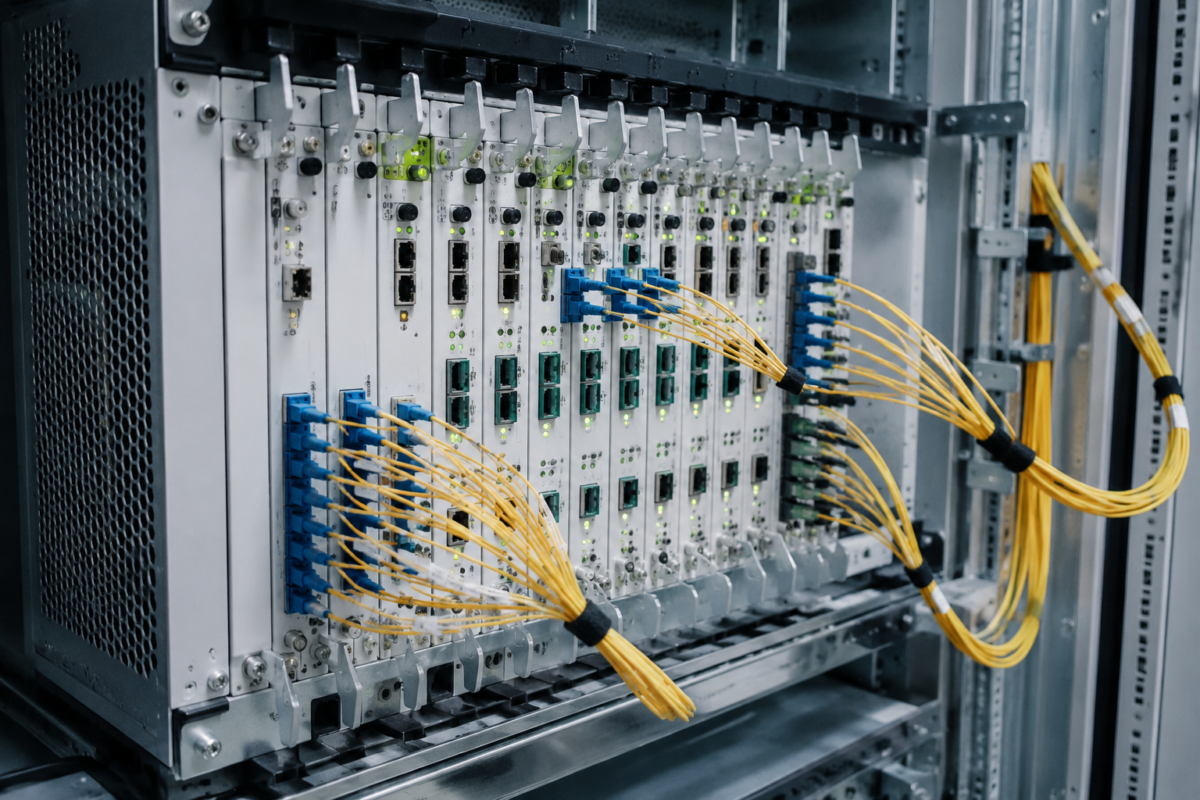
The reason this architecture handles high traffic volumes so effectively is the inherent efficiency of optical splitting combined with advanced bandwidth allocation algorithms. Unlike shared coaxial or wireless networks, a passive optical network does not suffer from cumulative noise or signal degradation as more users are added. Each user on a gpon card receives a dedicated, encrypted burst of data that does not interfere with neighboring connections. This architectural purity ensures that the maximum bandwidth of the fiber link is utilized entirely for payload data rather than error correction.
The effect on network stability during peak usage hours is a remarkably consistent user experience, even when hundreds of subscribers are streaming 4K video simultaneously. The line card dynamically adjusts the bandwidth allocation based on real-time demand, ensuring that heavy users do not monopolize the optical medium. This dynamic resource management prevents the bottlenecking that frequently plagues legacy shared-medium access networks. Consequently, customer churn due to poor evening performance is significantly reduced for operators utilizing this architecture.
Customizing the density and processing power of these line cards allows network operators to perfectly match their hardware to local demographic traffic patterns. A high-density urban deployment might require a gpon line card with maximum port counts and enhanced processing capabilities, while a suburban deployment might prioritize cost-effective, lower-density options. Wholesale manufacturers provide these varied configurations, allowing buyers to mix and match cards within the same chassis. This granular approach to hardware customization maximizes the return on investment for every individual central office deployment.
2.2 Why Telecommunications Providers Prioritize GPON Deployments
Telecommunications providers are prioritizing GPON deployments because government broadband initiatives and competitive pressures are forcing the rapid expansion of fiber-to-the-premises networks. The stakes are incredibly high, with massive federal and state subsidies often tied to specific deployment milestones and speed targets. A reliable gpon card allows providers to meet these aggressive timelines by simplifying the central office equipment installation process. This regulatory and competitive environment makes the rapid rollout of passive optical infrastructure a matter of corporate survival.
The driving forces behind this shift also include the declining costs of optical components and the increasing availability of compatible field equipment. As the global supply chain for optical transceivers matures, the unit economics of deploying a gpon line card have become vastly superior to maintaining aging copper plants. Telecom executives recognize that every dollar spent on legacy infrastructure is a dollar wasted, accelerating the depreciation schedules of copper networks. This financial realization is triggering a massive, industry-wide reallocation of capital expenditure toward optical access networks.
The consequences for equipment vendors are an unprecedented surge in demand for optical networking hardware, often outstripping the immediate production capacity of standard manufacturing lines. Vendors who cannot scale their production volumes or offer flexible customization options are rapidly losing market share to more agile ODMs. This supply chain dynamic places immense pressure on procurement officers to secure favorable terms and guaranteed delivery windows. The hardware supply chain has transformed from a buyer’s market into a highly competitive arena where securing inventory is a primary strategic objective.
The resulting surge in wholesale gpon card orders reflects a shift toward highly customized, region-specific hardware builds tailored to local telecom standards and environmental conditions. Providers are requesting custom firmware loads, specialized diagnostic ports, and unique physical labeling to streamline their field installation processes. This level of customization requires a deep collaborative relationship between the telecom operator and the wholesale manufacturer. By moving away from generic products, telecom providers gain a distinct operational advantage in deployment speed and maintenance efficiency.
2.3 Which Customization Options Matter for GPON Card Buyers
The most critical customization options for buyers revolve around the physical interface types, thermal management designs, and optical budget specifications of the hardware. A standard gpon card may not provide the exact optical power output required for a long-reach rural deployment versus a short-reach dense urban environment. Buyers must have the ability to specify Class B+, C+, or C++ optical transceivers to ensure signal integrity across their specific outside plant topology. These optical budget customizations are the fundamental building blocks of a reliable passive optical network.
The reason off-the-shelf solutions often fail in real-world deployments is the extreme variation in central office environmental conditions, such as ambient temperature and airflow patterns. A generic card might overheat in a poorly ventilated remote terminal, leading to thermal throttling and eventual hardware failure. Customizing the heat sinks, utilizing higher-temperature-rated components, and adjusting the fan control algorithms can mitigate these environmental risks. Tailored thermal engineering ensures that the hardware maintains optimal performance regardless of the physical deployment location.
The way tailored specifications prevent hardware failure directly extends the operational lifespan of the equipment and protects the provider’s return on investment. When a gpon line card is engineered to operate within the precise thermal and power parameters of its host chassis, the stress on the internal ASICs and lasers is significantly reduced. This reduction in electrical and thermal stress translates directly into lower mean time between failures (MTBF) and reduced maintenance costs. Custom-built hardware effectively eliminates the premature failure rates associated with forcing generic equipment into non-standard environments.
The best practice for B2B buyers is to engage ODMs during the initial network planning phase to co-engineer proprietary card designs that lock in these reliability advantages. This collaborative approach allows buyers to specify bespoke port configurations, such as combining GPON and XGS-PON interfaces on a single hybrid card to ease the migration path. By establishing a custom wholesale pipeline, buyers ensure that their unique intellectual property and operational preferences are baked directly into the hardware. This strategic partnership transforms the hardware supplier from a simple vendor into a critical engineering ally.
3. How Wholesale and Customization Maximize ROI on Optical Hardware
The financial logic behind purchasing a fiber optic network card through wholesale channels lies in the dramatic reduction of per-unit costs when bypassing retail markups and middlemen. Enterprise buyers and ISPs require dozens, if not hundreds, of identical optical modules to populate their chassis, making bulk procurement the only economically viable strategy. Wholesale pricing structures allow large-scale buyers to achieve unit costs that are often a fraction of retail pricing. This immediate capital savings provides a powerful justification for transitioning away from fragmented, ad-hoc purchasing habits.
The reason unit economics improve so drastically in direct factory engagements is the elimination of multiple layers of distribution overhead and inventory holding costs. When a buyer contracts directly with an original design manufacturer, the pricing reflects only the cost of raw materials, labor, and a nominal factory margin. Furthermore, wholesale buyers gain access to volume-tiered pricing that rewards larger commitments with progressively deeper discounts. This transparent pricing model empowers procurement teams to accurately forecast their total cost of ownership.
The impact on a company’s bottom line extends beyond the initial purchase price, as customized wholesale hardware significantly reduces installation and ongoing maintenance expenses. A fiber optic network card built to exact specifications requires less manual configuration, fewer adapter cables, and consumes less power than a cobbled-together retail solution. These operational efficiencies compound over the multi-year lifecycle of the hardware, resulting in substantial operational expenditure reductions. The true return on investment is realized when the hardware operates flawlessly for years with minimal human intervention.
The strategy of locking in long-term wholesale contracts serves as a powerful hedge against the volatile pricing of critical optical components, such as semiconductor lasers and microcontrollers. By establishing a framework agreement with a customized hardware manufacturer, buyers can fix their procurement costs for extended periods. This financial predictability is invaluable for large telecommunications providers operating on tight, multi-year infrastructure budgets. Strategic wholesale agreements ultimately transform network hardware from a volatile operational expense into a stable, depreciating capital asset.
3.1 Why Bulk Procurement Lowers the Total Cost of Ownership
The total cost of ownership goes far beyond the purchase price of optical hardware. Businesses must also consider provisioning, power consumption, maintenance, and future replacements. Bulk procurement helps reduce these costs by ensuring every deployed unit is identical. As a result, network management becomes simpler, and spare parts are easier to manage. When an ISP uses one customized fiber optic network card model across its network, technicians only need training for a single hardware platform. This standardization reduces errors and improves operational efficiency.
Moreover, bulk manufacturing improves product quality. ODMs can apply strict batch testing during production and verify every unit before shipment. Unlike retail purchases, where manufacturers test only sample products, bulk orders allow every card to meet the buyer’s requirements. Therefore, businesses receive reliable hardware and reduce the risk of deploying defective equipment.
In addition, bulk procurement lowers operational expenses. Companies need fewer emergency spare parts because every card is interchangeable across the network. This flexible inventory system frees valuable working capital and reduces storage costs. Consequently, organizations improve cash flow while maintaining network reliability.
Finally, enterprise buyers often replace small, reactive purchases with long-term procurement strategies. Multi-year blanket purchase agreements increase purchasing power and improve price negotiations. They also help manufacturers align production schedules with deployment plans. As a result, businesses secure better pricing, stable supply, and a lower total cost of ownership.
3.2 How Tailored Firmware Enhances Network Reliability
Firmware controls how a fiber optic network card processes traffic, corrects errors, and monitors hardware health. Generic firmware supports many environments, but it often includes unnecessary features. In contrast, tailored firmware focuses only on the protocols and security requirements of the target network. Therefore, it improves processing efficiency, stability, and overall performance.
Furthermore, proprietary firmware strengthens network security. Developers can add custom encryption keys and specialized security algorithms to block unauthorized access. A customized gpon line card accepts commands only from an approved network management system. As a result, it protects the network against unauthorized configuration changes and denial-of-service attacks.
Tailored firmware also integrates smoothly with existing management platforms. When a gpon card uses the ISP’s proprietary management protocol, telemetry data moves without translation errors. Network engineers can monitor optical power, temperature, and bit-error rates in real time. Consequently, they detect problems early and perform maintenance before failures occur.
Finally, buyers should request custom firmware during manufacturing instead of updating devices in the field. Field upgrades require additional equipment, skilled technicians, and scheduled downtime. However, factory-installed firmware allows immediate deployment after installation. This approach saves time, reduces risk, and supports a more efficient wholesale supply chain.
3.3 Which Strategic Partnerships Ensure Supply Chain Stability
Modern networking hardware depends on specialized optical components sourced from suppliers around the world. However, export restrictions, semiconductor shortages, and rising material costs continue to disrupt supply chains. A gpon card contains many critical components, and the shortage of just one part can delay production.
For this reason, relying on spot-market purchases creates unnecessary risk. During component shortages, manufacturers usually prioritize long-term customers over retail buyers. Consequently, businesses that purchase on the spot market often experience delayed network rollouts. Large telecom operators cannot afford these delays because they directly affect project timelines and customer growth.
Instead, long-term partnerships with ODMs provide greater supply chain stability. Manufacturers reserve production capacity and secure critical components for committed wholesale customers. As a result, production continues even during periods of market disruption. Although long-term agreements may require larger commitments, they provide far greater value than short-term purchasing.
Finally, businesses should establish multi-year framework agreements that include guaranteed order volumes and demand forecasts. Sharing forecast data helps manufacturers plan production more accurately and secure raw materials in advance. Therefore, buyers receive priority allocation and reduce supply chain risks. Companies that build these partnerships are better prepared for future growth and changing market conditions.
4. How 2025 and 2026 Market Trends Shape Optical Networking
Industry data from early 2025 indicates that global IP traffic has officially surpassed the threshold of 5 zettabytes per year, driven predominantly by the integration of generative AI into enterprise workflows. This unprecedented data deluge is forcing a rapid reevaluation of access network capacities, pushing legacy gigabit infrastructure to its absolute limits. The demand for a high-performance fiber optic network card has never been higher, as data centers scramble to upgrade their edge routing capabilities. This statistical reality sets the stage for a massive, multi-year hardware replacement cycle.
The reason this growth necessitates an immediate upgrade cycle is the inability of existing access and aggregation networks to handle the synchronous, high-bandwidth demands of AI model training and inference. Network architects are discovering that traditional oversubscription ratios are no longer viable when AI workloads require persistent, high-throughput connections to centralized GPU clusters. The physical layer must be upgraded to support near-line-rate traffic patterns to prevent artificial intelligence processes from stalling. This technical bottleneck is the primary catalyst for the sudden surge in optical hardware capital expenditures.
The way 2026 market projections indicate a massive supply-demand gap for high-speed optical components suggests that buyers who delay their procurement strategies will face severe challenges. Analysts forecast that the demand for 10G and above optical interfaces will outstrip manufacturing capacity by at least twenty percent by the end of 2026. This impending shortage will inevitably lead to extended lead times and inflated pricing for critical networking gear. The data paints a clear picture of a seller’s market emerging in the very near future.
The critical need for B2B buyers to procure customized optical hardware inventory well in advance is the most logical response to these impending market dynamics. Waiting for the 2026 shortage to materialize before placing wholesale orders will result in delayed network rollouts and lost market share to more proactive competitors. Forward-thinking procurement officers are already locking in 2026 delivery slots and securing custom engineering slots with their ODM partners. This proactive stance ensures that their network evolution remains on schedule regardless of global supply chain constraints.
4.1 Why 2025 Data Shows Unprecedented Bandwidth Demands
Industry data from 2025 shows that enterprise AI workloads now require sustained throughput of more than 10 Gbps. Just five years ago, this level of bandwidth was limited to core networks. Today, users and connected devices generate similar traffic at the network edge. As a result, a traditional fiber optic network card designed for legacy workloads can become a performance bottleneck. These changes clearly show that modern networks require much higher bandwidth than before.
Moreover, artificial intelligence and machine learning have changed how data moves across enterprise networks. AI applications constantly transfer massive datasets between storage systems and processing nodes. Unlike web browsing, AI traffic is continuous and highly symmetrical. Therefore, networks need high upstream and downstream capacity at the same time. Older networking equipment was not designed for these traffic patterns, making hardware upgrades essential.
Consequently, many infrastructure providers struggle to maintain reliable performance with legacy hardware. Older routers and switches often experience higher latency, packet loss, and thermal throttling during sustained AI workloads. These issues reduce network efficiency and shorten hardware life. As a result, many organizations replace aging equipment earlier than planned, increasing IT spending.
To solve these challenges, many enterprises now purchase advanced optical hardware in bulk. Wholesale manufacturers supply customized 25G and 40G optical cards that support AI cluster deployments. In addition, businesses increasingly request multiple high-speed optical lanes for east-west AI traffic. This bulk procurement strategy helps data centers meet growing bandwidth demands while preparing for future expansion.
4.2 How 2026 Projections Highlight the Shift to 10G PON
Market forecasts for 2026 indicate that 10G-PON (XGS-PON) will become the standard for residential and business fiber services. Consumer demand for symmetrical multi-gigabit connections continues to grow every year. Therefore, traditional GPON technology is approaching the end of its lifecycle. A gpon card limited to 2.5G downstream speeds will no longer meet the requirements of modern broadband services. As a result, service providers should begin planning for 10G-PON deployments now.
Furthermore, standard GPON technology cannot fully support today’s symmetrical bandwidth requirements. Modern cloud applications, remote work, and high-quality video communication require fast upload and download speeds. Upgrading to a compatible gpon line card provides up to 10 Gbps in both directions. Consequently, operators can future-proof their access networks for years to come.
Distributors must also update their product portfolios. Continuing to stock legacy GPON equipment increases the risk of holding outdated inventory. Instead, wholesalers should work closely with ODM partners to source next-generation XGS-PON hardware. This strategy keeps inventory aligned with market demand and customer requirements.
Finally, custom manufacturers offer additional flexibility during the migration process. A customized gpon card with pluggable optical modules allows operators to upgrade gradually instead of replacing the entire network at once. This staged deployment reduces capital costs and simplifies future upgrades. Therefore, flexible hardware designs will play an important role in 2026 network expansion.
4.3 Which OEM Strategies Will Dominate the Future Market
Open networking continues to reshape the telecommunications industry. More operators now prefer white-box and open-architecture hardware instead of proprietary platforms. This approach allows businesses to combine a fiber optic network card from one manufacturer with network software from another. As a result, buyers gain greater flexibility and reduce vendor dependency.
Moreover, organizations want to avoid expensive vendor lock-in. Proprietary systems often limit future purchasing options and increase upgrade costs. Open hardware standards solve this problem by allowing businesses to source compatible products from multiple suppliers. Consequently, companies gain stronger negotiating power and lower procurement costs.
ODMs can benefit from this trend by focusing on open hardware while offering customized solutions. For example, a custom gpon line card can meet open-architecture standards while providing improved thermal performance or higher optical budgets. This combination gives customers the flexibility of open networking and the reliability of customized hardware.
Finally, businesses should partner with wholesale suppliers that support open networking standards. Standardizing on customizable hardware improves supply chain flexibility and reduces long-term risks. In addition, organizations can adopt new technologies without replacing their entire infrastructure. This strategy prepares businesses for future growth while protecting their investment.
Frequently Asked Questions
1. How does a fiber optic network card improve network speed?
It converts data into light pulses, entirely eliminating the electrical resistance and electromagnetic interference found in copper wiring. This allows for multi-gigabit throughput with minimal processing latency.
2. Why is a GPON card essential for scaling telecom infrastructure?
It utilizes a point-to-multipoint architecture with unpowered optical splitters, allowing a single port to serve dozens of users. This drastically reduces central office power requirements and enables incremental, cost-effective subscriber growth.
3. How does a GPON line card manage high-density traffic?
It uses specialized microchips (ASICs) and dynamic time-division multiple access (TDMA) protocols to assign precise time slots to each user, ensuring equitable bandwidth distribution even during peak usage hours.
4. Why choose wholesale procurement over retail for optical hardware?
Wholesale bypasses retail markups, ensures absolute hardware standardization across large deployments, and provides guaranteed priority allocation during global component shortages.
5. Which customization options are most valuable for bulk buyers?
Bespoke form factors for proprietary chassis, custom thermal management solutions for harsh environments, specific optical budgets (like Class C++), and factory-preloaded proprietary firmware.
6. Why is early wholesale procurement critical for 2026 network upgrades?
Analysts project a 20% supply-demand gap for high-speed optical components by 2026. Securing multi-year wholesale contracts now guarantees production priority and locks in current pricing before inflation hits.
7. How does custom firmware enhance network reliability?
Custom firmware strips away bloated, unnecessary code, hardens the card against standardized cyberattacks, and ensures seamless, error-free integration with the buyer’s existing network management system.
8. What makes a fiber optic network card better than copper alternatives?
Fiber optics maintain signal integrity over kilometers without requiring signal regeneration, whereas copper suffers from severe attenuation and heat issues, making fiber the only viable option for future-proof infrastructure.
9. How do businesses initiate a custom wholesale hardware order?
The process begins with an internal infrastructure audit to document exact chassis, power, and optical budget requirements, followed by a joint engineering and rapid-prototyping phase with the ODM.