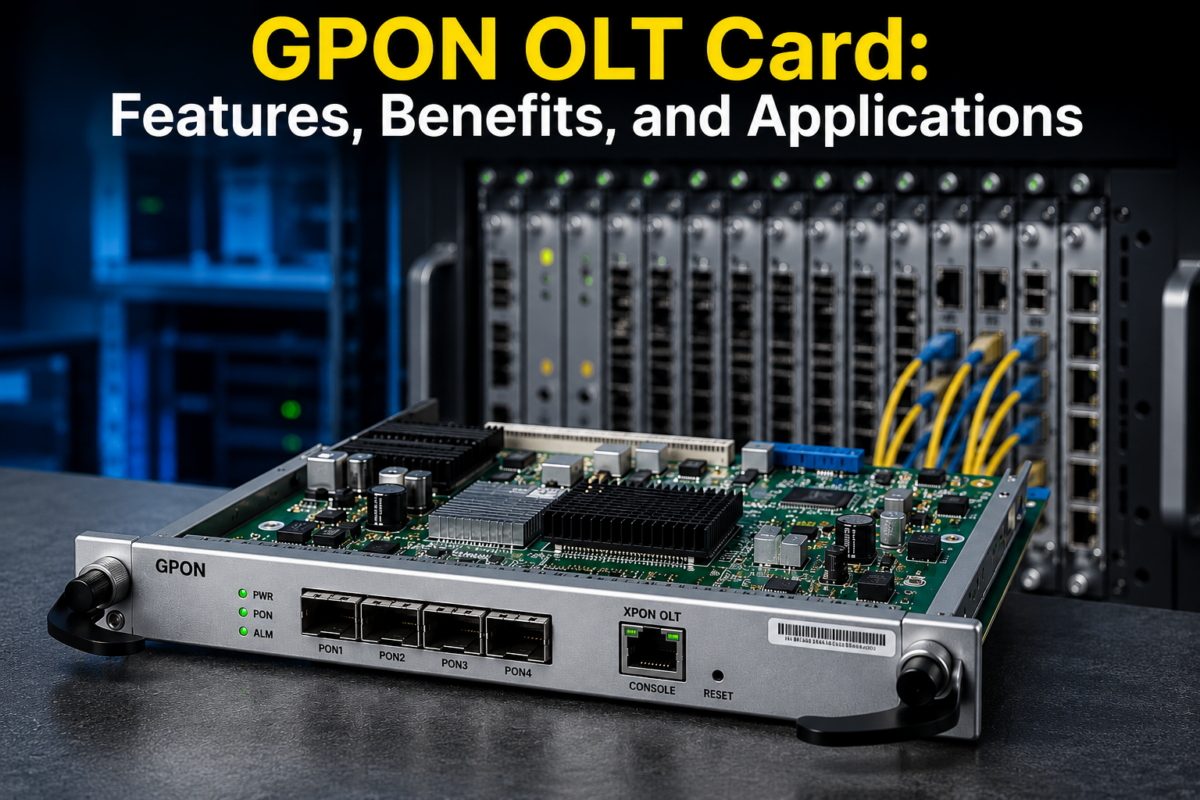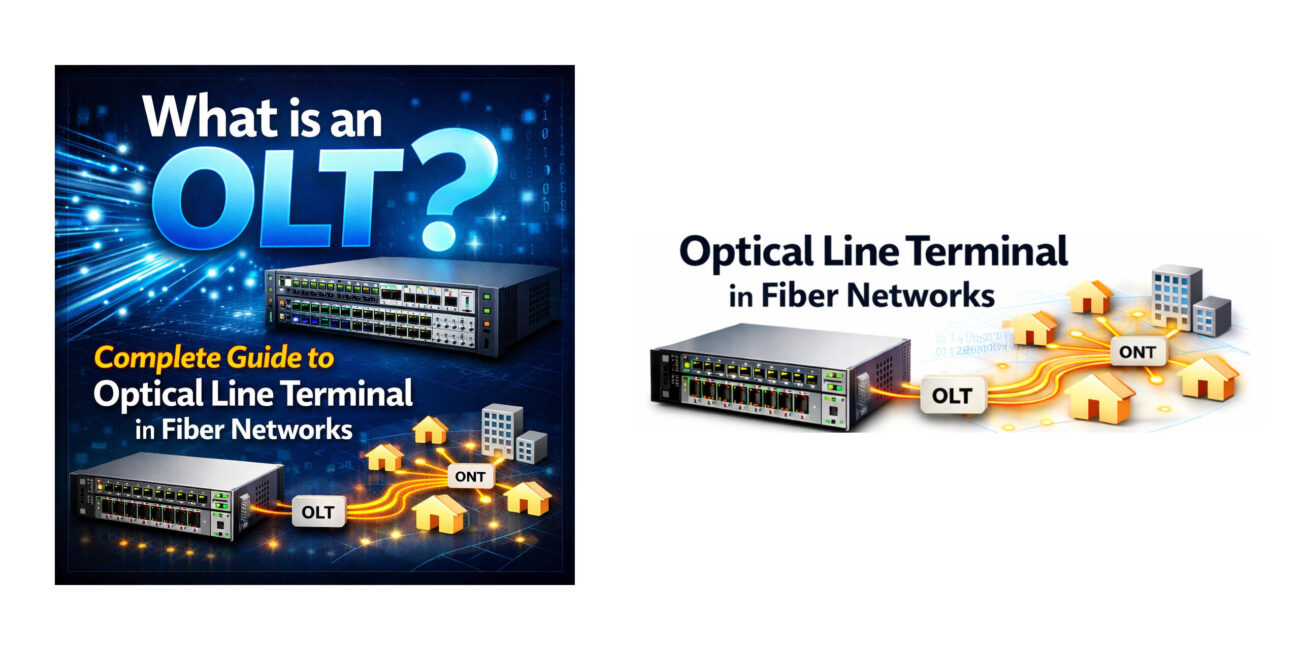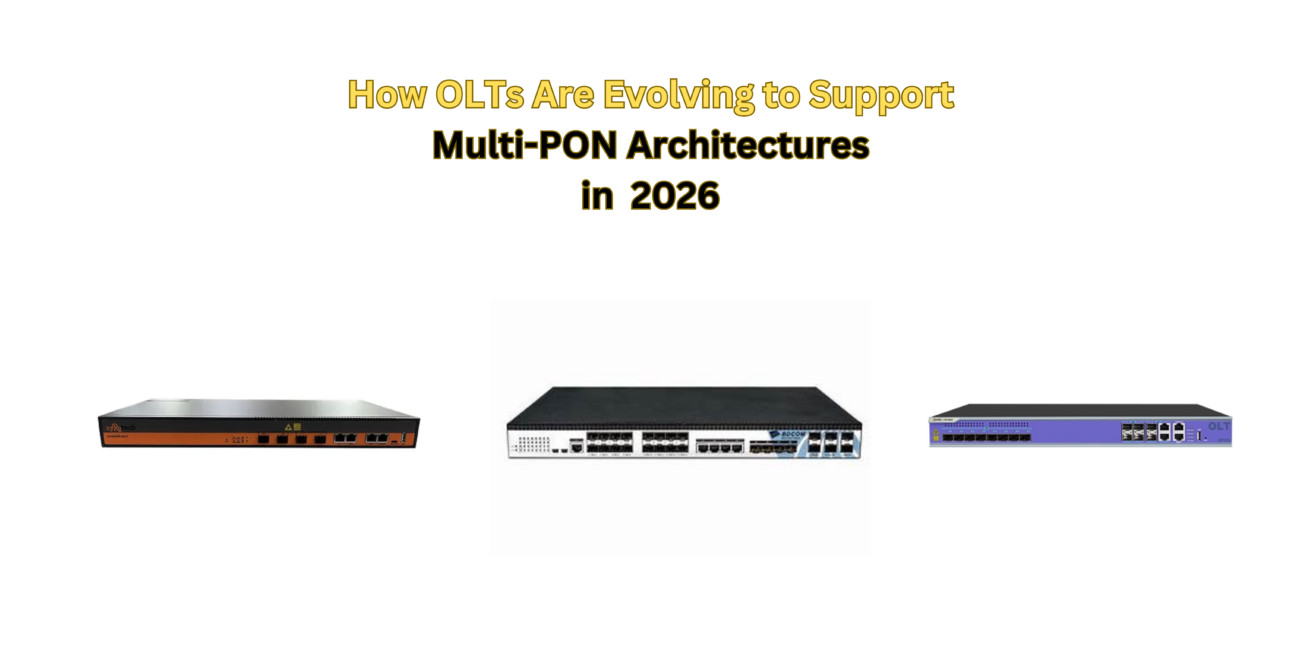


As demand for high-speed internet continues to grow, service providers are turning to Virtualized OLT, next-gen fiber network, and software-defined networking (SDN) to enhance performance, reduce costs, and improve scalability. Traditional Optical Line Terminal (OLT) systems have served as the backbone of fiber networks for years, but they come with limitations in scalability and efficiency. By leveraging virtualization and SDN, operators can optimize their networks to meet the increasing demand for ultra-fast, low-latency broadband services.
What Is Virtualized OLT?
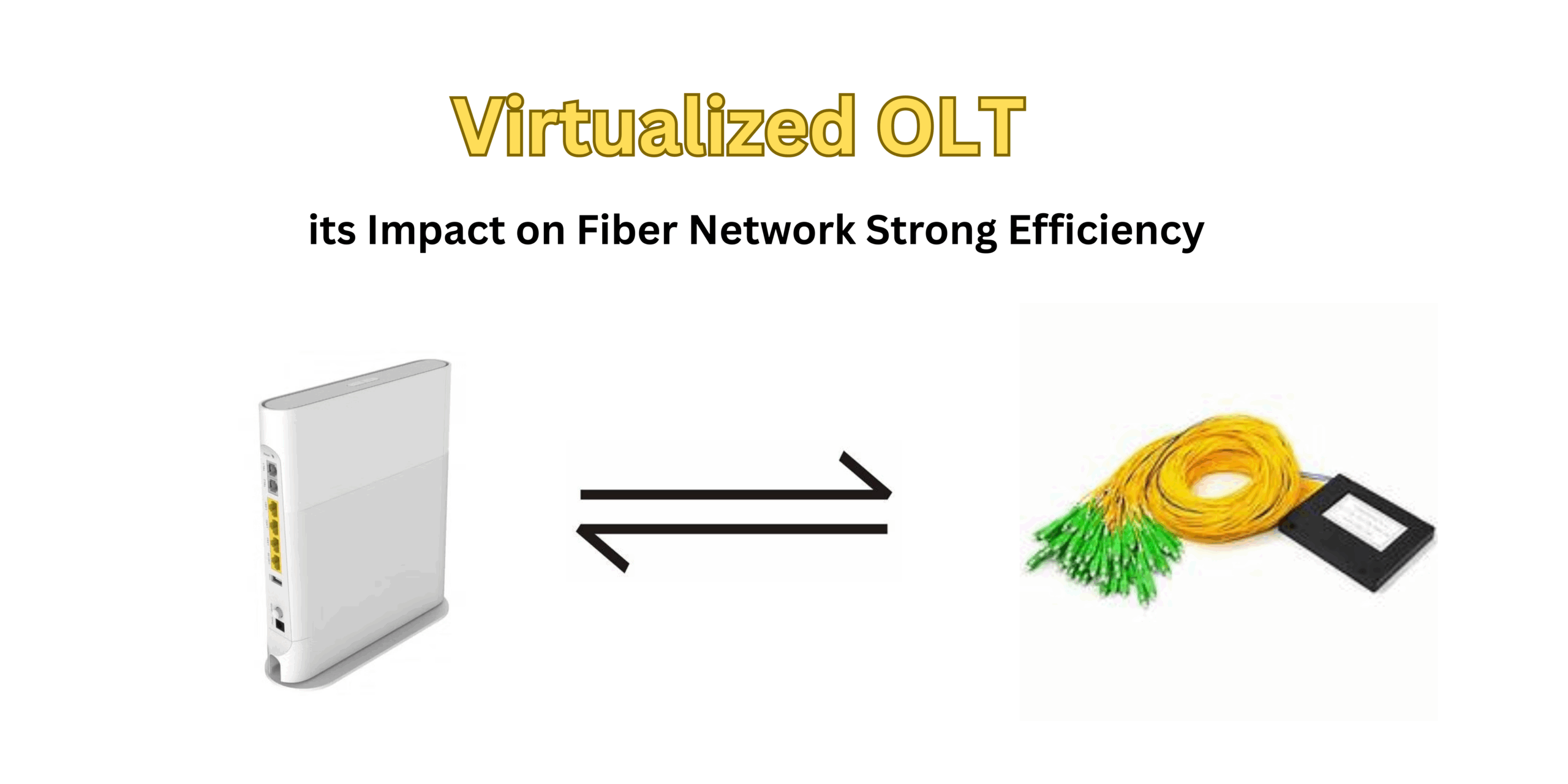
A Virtualized OLT (vOLT) is a software-defined version of a traditional OLT that separates control functions from hardware components. This approach enables network operators to centralize management, automate service provisioning, and dynamically allocate resources. Unlike conventional OLTs, which rely on proprietary hardware, virtualized OLT solutions run on commercial off-the-shelf (COTS) servers, making them more cost-effective and scalable.
Key Components of Virtualized OLT
- Software-Defined Control Plane: Separates the control functions from the hardware, allowing centralized network management.
- Disaggregated Hardware: Uses generic white-box hardware instead of vendor-specific OLT equipment.
- Cloud-Native Architecture: Supports flexible deployment models, including cloud-based and edge computing environments.
- Automated Network Management: Leverages AI-driven orchestration for real-time traffic optimization and fault detection.
By virtualizing the OLT, service providers can move away from traditional hardware constraints and embrace a next-gen fiber network with enhanced efficiency.
How Virtualized OLT Enhances Fiber Network Efficiency
The adoption of Virtualized OLT is transforming the way fiber networks operate. Here are the key ways it improves efficiency:
1. Scalability and Flexibility
Traditional OLTs require dedicated hardware for each service expansion, leading to increased costs and operational complexity. Virtualized OLT eliminates these limitations by enabling service providers to scale their networks dynamically.
- Cloud-Based Scaling: Virtualization allows operators to expand capacity without deploying new physical hardware.
- Elastic Resource Allocation: Bandwidth and computing resources are allocated based on demand, preventing network congestion.
- Multi-Tenant Support: Enables multiple ISPs or enterprises to share the same infrastructure without interference.
By leveraging SDN, operators can seamlessly upgrade their next-gen fiber network without major hardware investments.
2. Cost Reduction Through Hardware Disaggregation
Traditional OLTs are vendor-locked, meaning service providers must purchase and maintain proprietary equipment. Virtualized OLT breaks this dependency by separating software and hardware components.
- Lower Capital Expenditures (CapEx): Operators can use COTS hardware, reducing upfront costs.
- Reduced Operational Expenditures (OpEx): Automated management and remote troubleshooting minimize maintenance expenses.
- Energy Efficiency: Virtualization optimizes power consumption, lowering energy costs and reducing environmental impact.
These cost-saving benefits make virtualized OLT an attractive choice for service providers looking to modernize their networks.
3. Improved Network Automation and Service Provisioning
Traditional fiber networks require extensive manual configurations, which can slow down service deployment. Virtualized OLT automates these processes, ensuring faster provisioning and better network performance.
- Zero-Touch Provisioning (ZTP): Automates the setup of new customer connections, reducing installation time.
- AI-Driven Traffic Management: Uses machine learning to predict congestion and optimize data flow in real time.
- Self-Healing Networks: Detects and resolves issues autonomously, minimizing downtime.
By integrating software-defined networking (SDN) with virtualized OLT, operators can create a self-optimizing, intelligent next-gen fiber network.
4. Low Latency and Enhanced Performance
Modern applications such as 8K video streaming, online gaming, and cloud-based services require ultra-low latency. Virtualized OLT significantly reduces latency through intelligent traffic routing and optimized bandwidth allocation.
- Edge Computing Integration: Brings data processing closer to end users, minimizing delays.
- Dynamic QoS (Quality of Service) Management: Prioritizes latency-sensitive applications for seamless performance.
- Enhanced Data Throughput: Eliminates bottlenecks by using software-based network optimization.
By deploying virtualized OLT, service providers can ensure a lag-free experience for customers, making their next-gen fiber network more competitive.
Comparing Traditional OLT vs. Virtualized OLT
| Feature | Traditional OLT | Virtualized OLT |
| Scalability | Limited by hardware | Cloud-based, elastic scaling |
| Cost Efficiency | High hardware costs | Uses low-cost COTS hardware |
| Automation | Manual configuration | AI-driven network management |
| Latency | Higher due to static routing | Lower with dynamic optimization |
| Service Provisioning | Time-consuming | Automated with zero-touch provisioning |
| Energy Consumption | Higher due to physical hardware | Optimized power efficiency |
Challenges in Deploying Virtualized OLT
Despite its advantages, implementing Virtualized OLT comes with certain challenges:
1. Initial Deployment Complexity
Transitioning from a traditional OLT infrastructure to a virtualized OLT model requires careful planning. Service providers must:
- Upgrade their network architecture to support SDN and cloud-native operations.
- Train staff to manage and maintain software-based OLTs.
- Ensure compatibility with existing fiber access equipment.
2. Cybersecurity Risks
Since Virtualized OLT solutions are cloud-based, they are more susceptible to cyber threats. To mitigate risks, operators should:
- Implement robust encryption and authentication mechanisms.
- Use AI-driven threat detection to prevent security breaches.
- Adopt zero-trust security frameworks to protect sensitive data.
3. Vendor Interoperability Issues
Some legacy fiber network components may not be fully compatible with virtualized OLT solutions. Operators must:
- Work with open-source SDN frameworks to avoid vendor lock-in.
- Adopt standardized APIs for seamless integration.
- Conduct thorough interoperability testing before full deployment.
While these challenges require investment and effort, the long-term benefits of OLT far outweigh the drawbacks.
The Future of Fiber Networks with Virtualized OLT
As broadband demands continue to rise, the adoption of virtualized-OLT will become a standard practice for service providers. Future advancements in SDN, AI, and edge computing will further enhance next-gen fiber network performance, making fiber networks more efficient, cost-effective, and resilient.
Key Trends Driving Virtualized OLT Adoption
- 5G and IoT Expansion: High-speed fiber networks are essential for 5G backhaul and IoT applications.
- AI-Powered Network Optimization: Predictive analytics will enhance traffic management and fault detection.
- Hybrid Cloud Deployments: More operators will use a mix of public and private cloud resources for OLT virtualization.
By embracing virtualized-OLT, service providers can future-proof their networks, improve service quality, and gain a competitive edge in the broadband market.
Conclusion
The shift from traditional OLT systems to OLT is revolutionizing the fiber industry. By leveraging software-defined networking (SDN) and cloud-native architectures, operators can enhance scalability, reduce costs, and improve overall network efficiency. A well-implemented next-gen fiber network with OLT can deliver ultra-low latency, automated provisioning, and better bandwidth utilization—meeting the ever-growing demand for high-speed connectivity.
For service providers looking to stay ahead of the competition, investing in Virtualized OLT is no longer an option—it’s a necessity.